Can Self-Hatred Be Productive?
My first instinct was to say yes, it can be.
This is a question I've been thinking about for weeks now. It has been an interesting one to contemplate, and I'm not really sure where the interest for this particular question began. This issue has been making me consider the true outcomes of what results from people who hate themselves.
For example, you could look at extreme examples of somebody who hates themself, but they turn that anger and self-loathing into fuel. This typically results in somebody beginning a metamorphosis into somebody stronger, better, more disciplined; the ideal version of themselves.
An extreme but notable example of a person who fits into this category is David Goggins. He is a man who, in his early 20s, weighed 300 pounds, hated his life and pest control job, and needed a drastic change in his life. After devoting himself to become a Navy SEAL, he lost over 100 pounds in under 3 months, passed "Hell Week" training (often considered the most grueling physical and mental crucible in the United States military) 3 times in under one year, and went on to become an ultramarathon athlete, author, and a role model for many people who look at his transformation with reverence. He is a man I respect deeply, and I believe his story of living with self-hatred and overcoming it inspires many people to spark change in their life.
That said, let's look at the other side of the coin and observe examples of self-hatred doing the exact opposite.
Vincent van Gogh was one of most influential painters in the 19th century, and you've likely stumbled across his work several times.
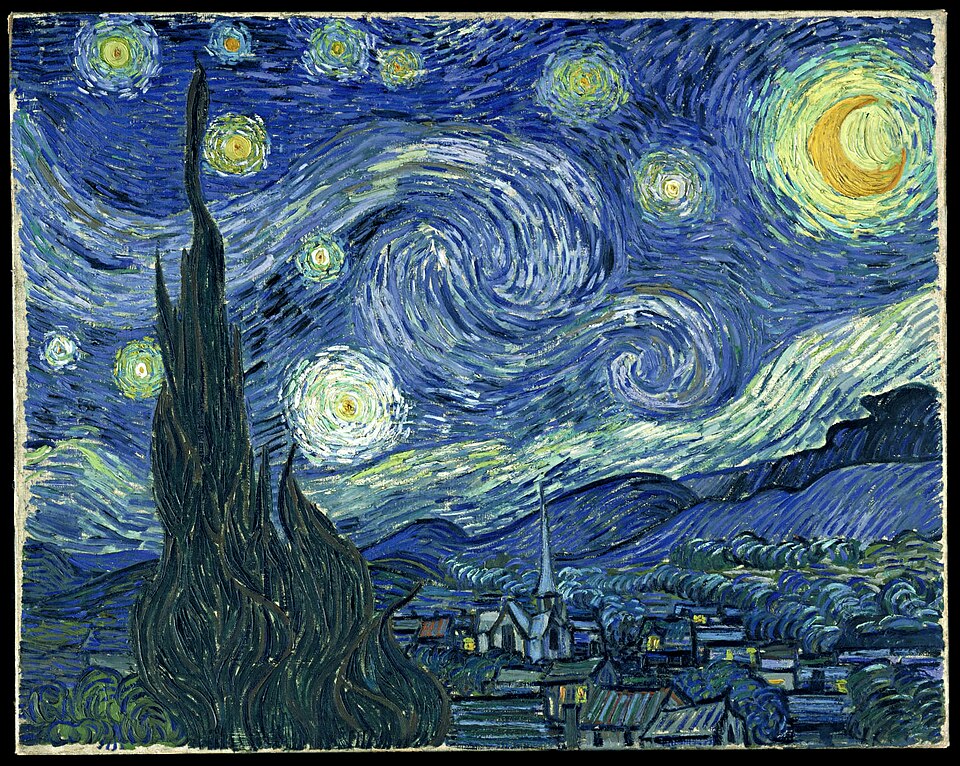
During his life, van Gogh was plagued by self-hatred, depression, and numerous other mental health issues. His success as an artist was unfortunately not anything to boast about. He was believed to have only commercially sold one painting while he was alive, and his status as a painter was largely unknown. Tragically, his recognition and fame only arrived after his death by suicide in 1890 when his family promoted his work in his memory.
Van Gogh often wrote about himself with extreme self-deprecation, expressing guilt and shame because he was relying on financial support from his brother during his unsuccessful career as an artist. He commonly described himself as a worthless artist, an "unpleasant person," and an "eccentric." These sentiments were largely unchanged during his troubled life.
This is an important consideration in the context of questioning if self-hatred can lead to positive change. I want you to consider how van Gogh's life as an artist could have been different should he have had a higher opinion of himself. Or, at the very least, not hated himself.
Could it have led to a longer, more successful career and life? Could it have resulted in him producing thousands of more paintings and leaving behind more of an artistic legacy?
Due to his extensive history of mental health issues, there's obviously some caveats to this analogy of self-hatred solely leading to his destruction, but I believe that it can still be illustrated that his overwhelming sense of self-loathing contributed heavily to it. Perhaps his paintings became known because of his tragic life, which I do believe played a role in his later acclaim.
Van Gogh was a deeply troubled man who, during his life, did not become famous or even commercially successful.
This then begs the question of what one would want out of life. Is it to be happy? Famous? To love oneself?
I suppose the claim that self-hatred leading people to be productive can be made in both examples I've provided here. However, I also believe that most people don't want to live their whole life hating themselves. I've touched on this briefly in an earlier post where I was discussing the arrival fallacy, in which I made the argument that if your future aspirations outweighs your self-perception, you will never be happy.
I want to make my position on this clear: I do not believe that self-hatred can be productive. At its core, self-hatred is a feeling that undermines you, makes you doubt yourself, and, at its worse, can feel almost paralyzing.
If somebody is stricken with an overwhelming sense of self-hatred, the self-hatred is not the source of positive change in their life. I would actually argue that it is only possible for self-hatred to fuel negative change. It is not what causes somebody to change for the better.
It's self-worth. Self-love.
People who undergo positive transformations in their life do it because a part of them believes they deserve better, that they are meant to be happy, that there is more to life than succumbing to their self-hatred.
Self-hatred is what makes people's lives crumble. Self-love is what makes people build their life up, and change for the better.
The distinction between how self-hatred and self-worth contribute to your ambition is one of the most important realizations I've come to know in my life. If you are unable to recognize that distinction, you may believe that if you continue hating yourself, you might one day outwork the hatred to be happy.
But the correct, simpler way to frame this, is that you love yourself too much to continue hating yourself. And this, is where positive change begins.
"If you hear a voice within you say 'you cannot paint,' then by all means paint and that voice will be silenced."
— Vincent van Gogh